
Bordeaux is not a shy wine. It’s dark, powerful, and full of presence, like the kind of bottle you open when the lights are low and the meal is serious.
In the glass, it delivers bold flavors of black currant and black plum layered with cedar, warm spice, and a hint of dark cocoa that lingers on the finish.
There’s depth, structure, and a feeling of quiet intensity. This is the wine you want next to rich meats like grilled steak or braised short ribs, or alongside roasted mushrooms, where its earthy, savory side really comes alive. It doesn’t just sit next to the food, it locks arms with it.
Tasting Notes Video
This wine follows the classic Bordeaux playbook, but with a Merlot-driven twist: 92% Merlot, 6% Cabernet Franc, and 2% Cabernet Sauvignon. Merlot leads the way, bringing plush texture and generous notes of ripe plum and dark fruit that make the wine immediately approachable.
Cabernet Franc adds lift and aromatic complexity, with subtle herbal tones that weave through the fruit, while a small amount of Cabernet Sauvignon contributes structure, backbone, and a hint of that signature cedar character. Together, the blend captures the essence of Bordeaux, balance, harmony, and layering, while leaning into a softer, more velvety style that makes it as enjoyable now as it is food-friendly.
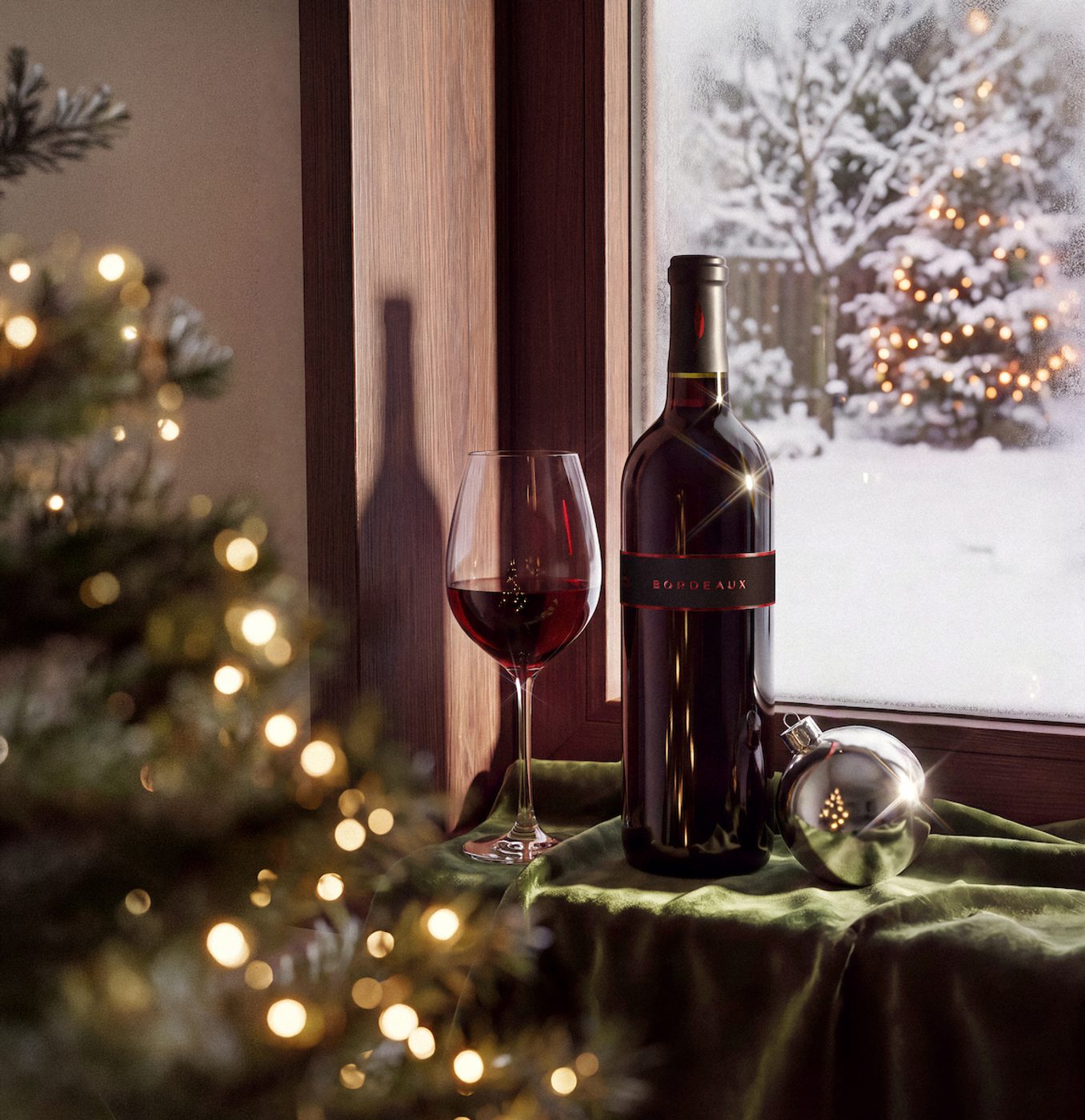
Bordeaux Bottle
The story of Bordeaux wine is epic. Vines have grown here since Roman times, but the region’s fame surged in the Middle Ages as its wines traveled trade routes to England and beyond. Over centuries, growers refined the art of matching grape varieties to specific soils, gravel for Cabernet Sauvignon’s structure, clay and limestone for Merlot’s plushness, creating a culture of blending that became Bordeaux’s signature.
By the 18th and 19th centuries, these wines were so prized that formal systems like the 1855 Classification ranked estates by reputation and quality. From a technical standpoint, this blend leans heavily into Right Bank philosophy, where Merlot dominates due to its affinity for clay-rich soils and its ability to achieve phenolic ripeness at lower sugar levels. This results in wines with softer tannin profiles and a rounder mouthfeel.
Cabernet Franc contributes aromatic lift through compounds like methoxypyrazines, adding subtle herbal complexity, while Cabernet Sauvignon, even in small proportions, reinforces tannin structure and age-worthiness through its thicker skins and higher phenolic content. The interplay of these varieties creates a wine that is not just balanced, but architecturally precise, a reflection of centuries of refinement in one of the world’s most influential wine regions.
